

As a research institute, we have a new paradigm: our work is grounded in science, shaped by many perspectives, and designed to create real tools for real change.
At the heart of this approach is our participatory design cycle — our method for co-designing every step with young people, families, and educators. Together, we identify dilemmas, seed solutions, and harvest what works. This is how we ensure our research, resources, and curricula are relevant and meaningful to the people they’re designed to serve.
As we shared our participatory design cycle, we discovered that many educators and researchers believe in the concept of co-creation but don’t know where to begin. This toolkit can be a starting point.
It was created and curated by a team of researchers and practitioners across education, psychology, and sociology to be a resource for anyone interested in genuine collaboration.
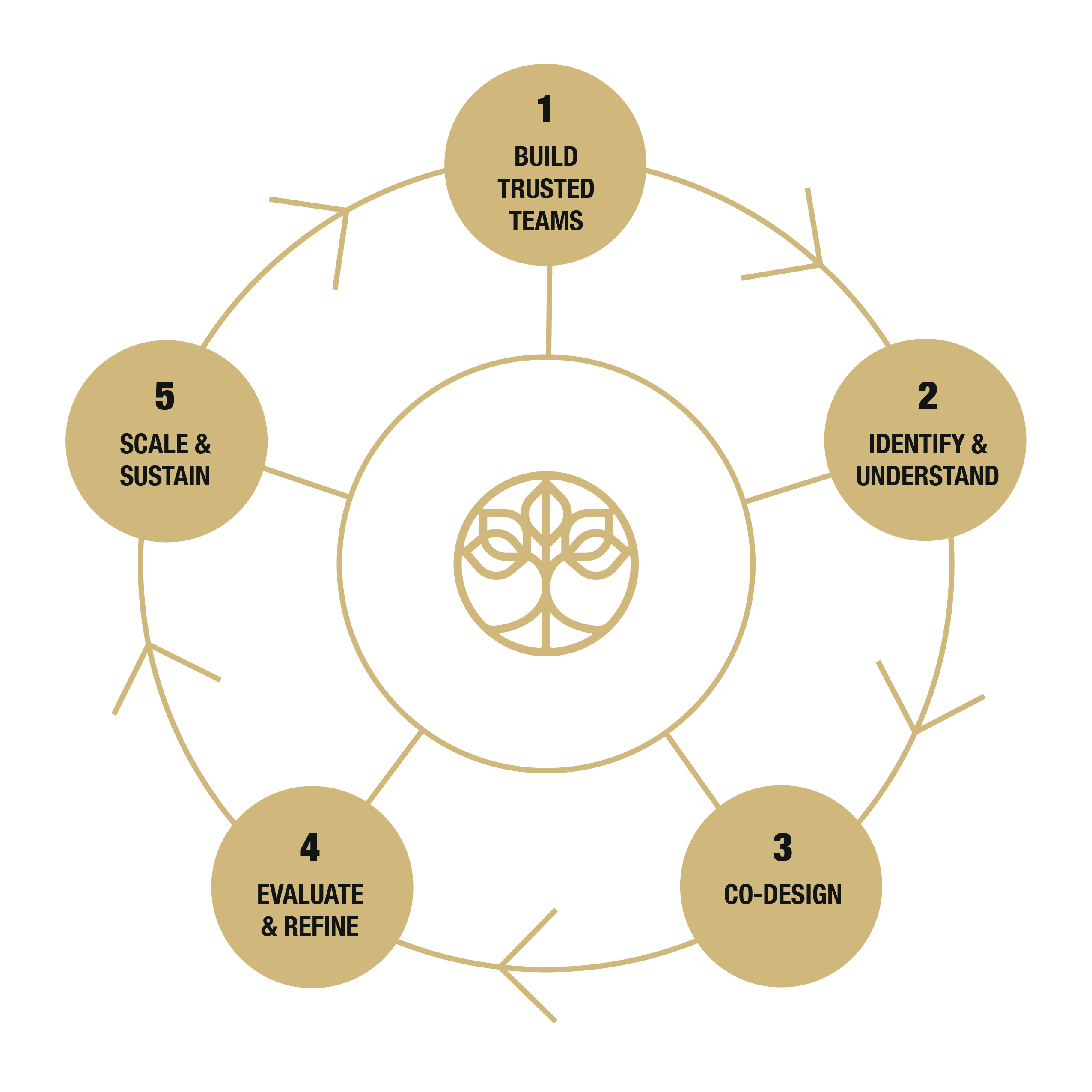
Drawn from a decade of extensive partnerships with many youth and community collaborators, the toolkit compiles practices, activities and guidelines for each step of the participatory design cycle.
For each stage, you’ll find detailed guides, with:
The beginning, middle, and end of any participatory design cycle are the people inside of it. The toolkit’s repository of activities for building trust can be applied at all stages.
For whom are we designing? And who else might be impacted by what we create? These activities help us hold our intended audiences — and the people around them — at the center.
In any collaborative process, the team will encounter junctures, unexpected events and outcomes, and important decisions. These activities help teams navigate these critical moments.
Here, we demonstrate how foundational research activities — gathering field notes, coding data, establishing measurements — can be conducted through the lens of co-design.
The participatory design cycle is just that: a cycle. This stage helps teams to see where they’ve been — together — and where their work might go in the future.
While created for researchers, this robust 150-page resource can support any designer, educator, or practitioner seeking to engage diverse perspectives. We’re looking forward to hearing how it might help you. (Note: we’ll also send you the Crown Institute's quarterly newsletter.)